calculators
Pythagorean Theorem Calculator
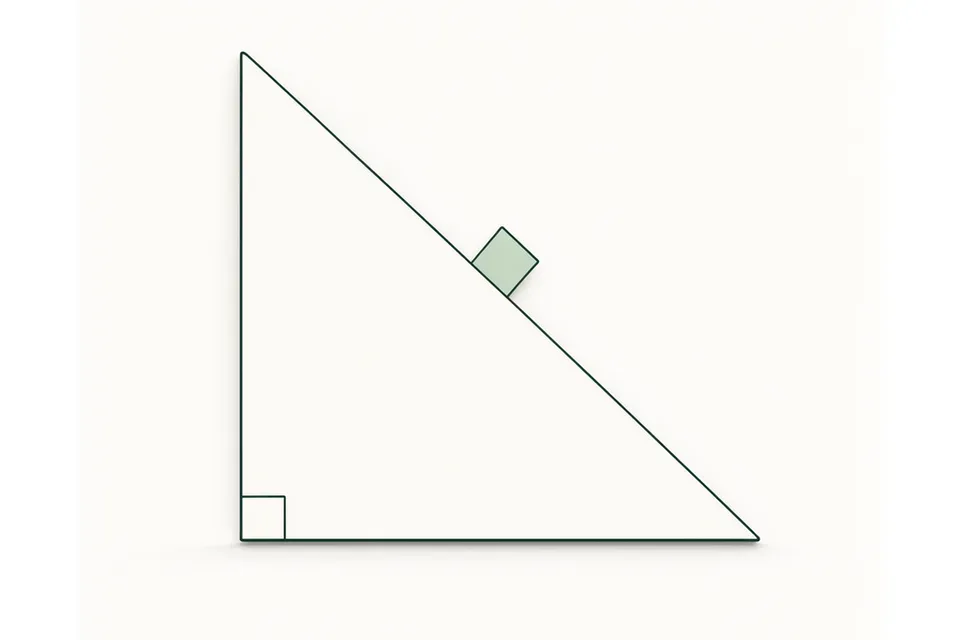
Solve a right triangle with the Pythagorean theorem: find the hypotenuse from legs a and b (c = sqrt(a^2 + b^2)) or a missing leg from the hypotenuse and the other leg (a = sqrt(c^2 - b^2)). The formula used is shown for each direction, and impossible or degenerate inputs are flagged honestly, never clamped.
Two legs
e.g. 3, 4 or 6.5
e.g. 4, 8 or 2.5
a and b are the legs that meet at the right angle; c is the hypotenuse opposite it. The legs are interchangeable - swap the names if your diagram labels them differently.
Hypotenuse
Enter legs a and b - the hypotenuse c solves live as you type.
How sides work here
- Right triangles only - the angle between legs a and b must be exactly 90 degrees. For general (oblique) triangles use Triangle Solver instead.
- Sides are unitless - enter a, b and c in one shared unit (cm, in, m); the tool never converts between units.
- Display precision is 6 significant digits in Decimal mode; Exact mode shows the simplified radical (like 5*sqrt(2)) when one exists - decimals otherwise.
- Impossible inputs (negative sides, a hypotenuse not longer than the known leg) are flagged, and zero-leg inputs are labelled degenerate - nothing is silently clamped or repaired.
- Results are for learning and checking work - estimates, not surveying, engineering or construction-grade measurement.
Enter legs a and b - the hypotenuse c solves live as you type.