music
Scale Builder
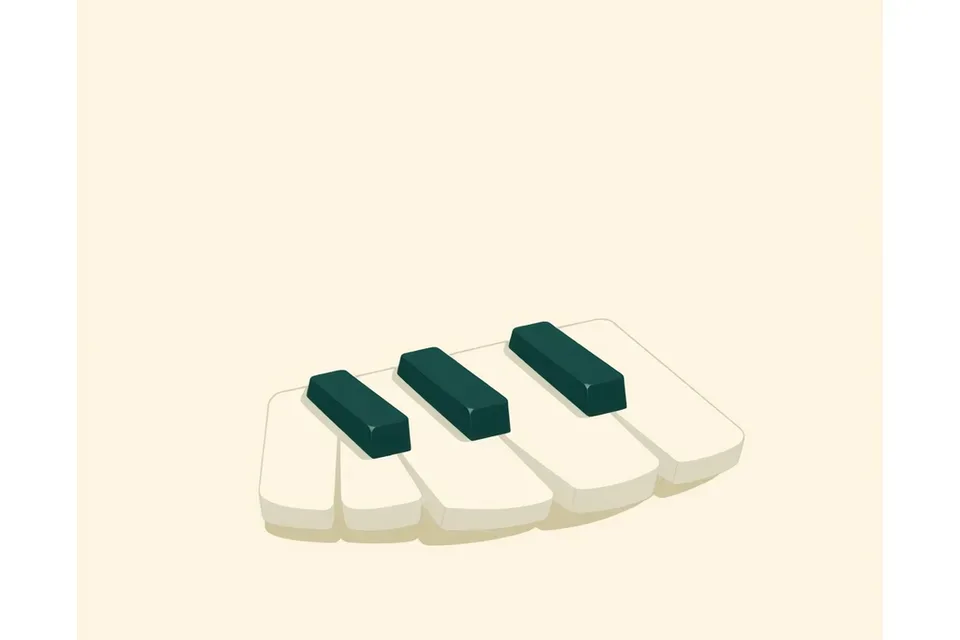
Pick a tonic and one of 32 scale families — major, three minors, the modes, pentatonics, blues, world exotics (chinese, egyptian, hirajoshi…), extended scales and symmetrical sets — to see spelled note names, scale degrees, intervals from the tonic, a one-octave piano keyboard and an on-request audition. Sharp or flat spelling, your choice.
Scale settings
One of the 12 pitch classes — the scale's home note. Labels follow the spelling preference below.
The bright seven-note major scale — do re mi.
Every change rebuilds the scale live. Note names follow conventional spelling — F# major gets E#, not F; sharp-side keys can show double accidentals (A# major → C##), while flats give the usual flat-key forms.
Scale
C major
Major (Ionian) — The bright seven-note major scale — do re mi.
Scale degrees
- 1C0 semitones · unison
- 2D+2 semitones · major 2nd
- 3E+4 semitones · major 3rd
- 4F+5 semitones · perfect 4th
- 5G+7 semitones · perfect 5th
- 6A+9 semitones · major 6th
- 7B+11 semitones · major 7th
Note names
C · D · E · F · G · A · B
Intervals from the tonic (semitones): 0 · 2 · 4 · 5 · 7 · 9 · 11.
Audition voicing
C4 · D4 · E4 · F4 · G4 · A4 · B4
One note per degree, ascending from the tonic's octave-4 pitch — Play sounds them together. Spelling changes the written names, never the pitches.
On the keyboard
Filled keys are the scale pitch classes in one octave (C3–B3) — every scale tone shown once.
Play runs the scale up then back down, one note every 250 ms — it starts only when you press it. Copy writes the scale text shown above.