nautical
Tide Height Estimator
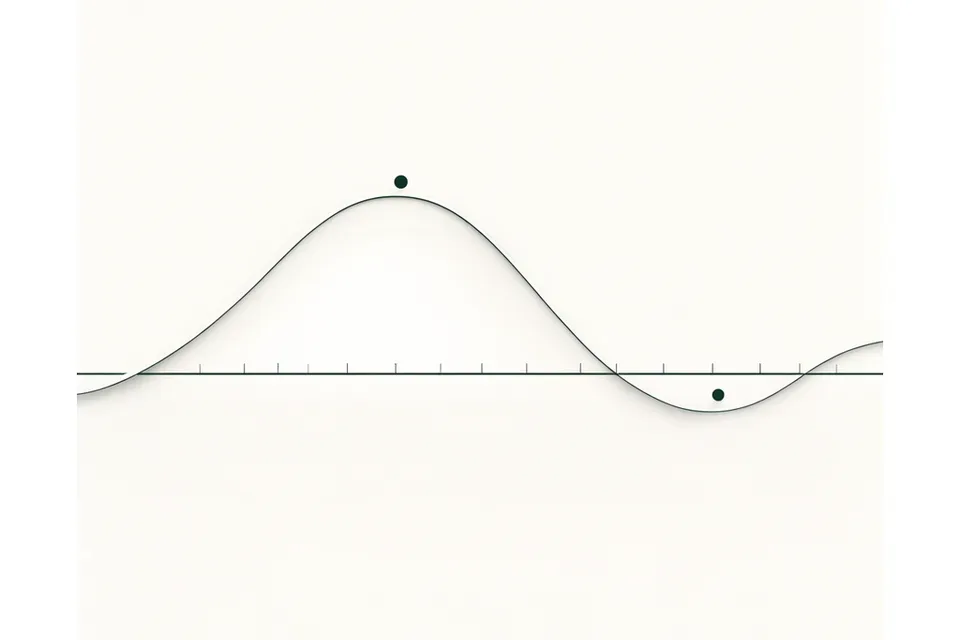
Estimate the tide height at any time between two published waters. Enter two consecutive extremes - one high water and one low water, each with its time and height from your tide table - pick a time, and the height is interpolated with the rule-of-twelfths cosine curve. The equivalent twelfths fraction, a worked line and an ASCII tide curve are shown. A labelled approximation for reference - not for navigation.
Waters and target time
The time to estimate the height at - e.g. 09:00; must fall between the two waters.
A label only - every height shares this unit and the curve is linear in it, so no conversion runs.
Enter two consecutive published waters - one high and one low water - each with its time and height from your tide table, then pick the time to estimate. A water after midnight pairs with the previous evening automatically.
Estimated height
Enter two consecutive waters - one high and one low - each with a time and a height, then pick a time to estimate.
What this estimate is - and is not
- The estimate assumes a sinusoidal tide - the cosine curve the rule of twelfths (1-2-3-3-2-1) approximates. Real tides are asymmetric: rise and fall rates differ and shallow water distorts the curve.
- Not for navigation - this is a labelled approximation for reference. Official tide tables, charts, a plotter/GPS and local knowledge govern; there is no built-in station data - you supply the waters.
- The two waters must be consecutive extremes of opposite type - one high and one low water. The target time must fall between them; outside the window the tool asks for the adjacent pair.
- Times are 24-hour clock times as published (am/pm also accepted). A water after midnight pairs with the previous evening - the day wrap is handled automatically.
- Heights can be negative (below chart datum). Metres and feet are labels only - every height shares one unit and the curve is linear in it, so no conversion runs.
- Display rounding only - the estimate is computed at full precision; verify against official sources for anything that matters.
Enter two consecutive waters - one high and one low - each with a time and a height, then pick a time to estimate.